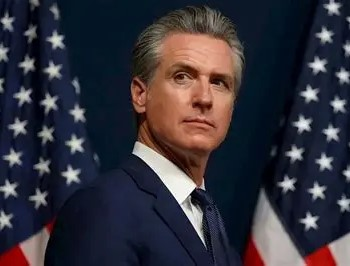
Californians Face New Laws: Gov. Gavin Newsom Signs 794 Bills in 2025
Budget Deficit and Unmet Promises in Final Year as Governor
Written by Mike Hernandez
SACRAMENTO–Governor Gavin Newsom signed 794 of the 917 bills that were sent to him in 2025 by the California Legislature. He vetoed 123 bills or 14 percent of the bills received.
According to 30-year Sacramento lawyer and lobbyist Chris Micheli, writing for the California Globe, this was the least amount of bills that Newsom has signed during his seven years as Governor with the exception of the two COVID years of 2020 (signed 372 of 428 bills) and of 2021 (signed 770 of 836 bills). During all seven years he signed 5,770 bills out of 6,641 that were sent to him with vetoes for 931 bills.
This highest legislative veto rate among recent Governors (since 1991) is as follows:
- Gov. Arnold Schwarzenegger, R, 2003-2010: 26.5 percent (signing 5,491 of 7,472 bills);
- Gov. Gray Davis, D, 1999-2003: 17.6 percent (signing 5,144 of 6,242 bills);
- Gov. Pete Wilson, R, 1991-1998: 16.8 percent (signing 9,365 of 11,282 bills);
- Gov. Jerry Brown, D, 2011-2019: 13.7 percent (signing 6,935 of 8,030 bills).
A glimpse of some of Gov. Newsom’s legislative bills shared by The Center Square, a conservative online news platform of the Franklin News Foundation:
- Artificial Intelligence Act:
- Senate Bill 53, the Transparency in Frontier Artificial Intelligence (AI) Act, was passed based on recommendations from a working group of leading AI experts that Newsom convened last year after a broader AI bill was vetoed by the Governor in 2024. A first-in-the-nation law requires major AI companies to publicly disclose their safety and security protocols and report critical safety incidents such as cyberattacks. The law provides protections for whistleblowers and calls for the creation of a public cloud computer cluster, called CalComput, to provide AI infrastructure for start-up companies and researchers.
- Court Recording:
- The Name Accuracy Act which ensures that people’s names are recorded correctly.
- Crime:
- Assembly Bill 409: Strengthening Safe Leave Act expands job protections for victims of violence.
- Employment:
- Assembly Bill 692: Empower workers to leave poor working conditions.
- Training Repayment Agreement Provision (TRAP) known as “stay or pay” contracts which require workers to pay back the cost of on-the-job training or other alleged debt to the employer or pay a financial penalty if the person leaves before a certain time period are no longer legal. Employers who violate the law will have to pay for actual damages sustained by the worker or $5,000 per worker.
- Healthcare:
- Assembly Bill 260: Bans denying abortion care to an incarcerated person or a minor in juvenile detention. Allows for the abortion-inducing drug, mifepristone, the abortion pill, and similar drugs.
- Senate Bill 27: Allows courts to determine if someone with bipolar disorder is eligible for the Community Assistance Recovery and Empowerment program without a hearing to decide eligibility. Allows people with schizophrenia to qualify for behavioral health aid and other assistance programs if they’re found incompetent to stand trial.
- Housing and Homelessness:
- Assembly Bill 628: Property owners who rent to tenants must ensure that there is a working refrigerator and stove in the rental unit. Any rental unit that doesn’t have both will be considered uninhabitable. Landlords have to replace broken stoves or refrigerators.
- Assembly Bill 1308: Requires city and county building departments to inspect newly-completed residential construction within 10 days of receiving notice that construction work is done. This law also applies to new construction on an existing residential building.
- Senate Bill 634: Aims to make it illegal for local governments to ban organizations or individuals from helping unhoused members of the community or banning helping the homeless.
- Immigration:
- Assembly Bill 1261–Requires the state to provide free representation for unaccompanied children in immigration proceedings in federal court as well as state-related immigration proceedings.
- Senate Bill 627–Anti-mask law for law endorsement authored by Sen. Scott Weiner, D-San Francisco, prohibits law enforcement officers from wearing masks on the job.
- New laws beginning Jan. 1 require California and federal law enforcement officers in the state, when not wearing an agency uniform, will be legally required to wear identification showing their agency and either a name or badge number. Only officers operating undercover are exempted from the rule.
- Overdrafts and Data Leaks:
- Beginning Jan. 1, overdraft fees can no longer exceed $14.
- Businesses that collect data will have to alert any California residents whose information may have been compromised in a security breach within 30 days
- Pets:
- Ban on procedures to remove cats’ claws, unless it’s done as a therapeutic procedure by a veterinarian.
- Plastic Bags:
- Ban on single-use plastic bags. There is a ban on all plastic shopping bags at checkout. Only recycled paper bags or compostable alternatives are allowed.
- Schools (Posted by EdSource):
- Assembly Bill 495, The Family Preparedness Plan Act, expands the pool of relatives that can be authorized to make decisions and care for children if parents are detained by immigration authorities or deported.
- Assembly Bill 715 establishes a state Office of Civil Rights to help school districts identify and prevent discrimination based on antisemitism, gender, religious and LGBTQ status.
- Assembly Bill 3216, the Phone-Fee School Acts, approved in efforts to curb classroom distractions, bullying and addiction to devices.
- Senate Bill 760: All California school campuses are required to have a gender-neutral bathroom.
- Workers’ Rights & Minimum Wage:
- Jan. 1st marked a 40-cent-per-hour increase to the minimum wage to $16.90 from $16.50–an increase of 2.5 percent. California voters rejected a ballot measure in 2024 that would have raised the minimum wage to $18 an hour.
Budget Deficit And Unmet Promises In Final Year As Governor
While California Governor Gavin Newsom eyes a 2028 Presidential run, he faces a State budget that went from a $97 billion surplus in 2022 to a budget deficit of $18-$35 billion in 2027-28 and many unmet promises in his final year in office according to CalMatters, a California nonprofit news platform created in 2015.
(Editor’s Note: See story: “California Goes From A Surplus Budget Of $97 Billion In 2022: Legislative Analyst Office Warns State Faces An $18-$35 Billion Deficit.”)
When Gov. Newsom ran for statewide office in 2018 he vowed to tackle homelessness, which has only gotten worse over his seven-year tenure despite spending $24 billion. He also proposed that new parents would get six months of paid leave, which he reduced to a two-week increase, for a total of eight weeks, and gradual boosts in how much the program pays.
In 2021, he said the state would add 200,000 new subsidized child care slots but the plan was delayed for two years and remains tens of thousands of slots short.
Gov. Newsom campaigned on establishing a single-payer public health care system but then pivoted to “universal coverage” with the state slowly expanding coverage for low-income Californians, including undocumented immigrants. This was halted in last year’s budget deficit.
Housing eats up more than a third of Californians income. Newsom campaigned on “affordable housing” and boasted he would add 3.5 million new homes by 2025. By 2024, the state had added 120,000 new units.
Last January, California wildfires broke out and devastated Los Angeles. A year later, Californians are still waiting to be reimbursed for $40 billion in wildfire aid for the Palisades and Eaton fires that burned thousands of homes and claimed dozens of lives.
Gov. Newsom has clashed with President Trump over the use and control of the National Guard which was used by the White House to suppress the June anti-Ice protests. Newsom has also clashed with President Trump over the issuing of Commercial Drivers Licenses to non-citizen truckers that struggle to understand English or read basic road signs. California has the highest rate of issuing CDLs in the nation with an estimated 17,000 issued.
Investigative journalist Katy Grimes covering California’s State Capitol in Sacramento and Editor in Chief of the California Globe reported Dec. 17 on “Top 50 Disasters Gov. Gavin Newsom Has Ushered Into California.” Here are the first 10:
- Water rationing continues.
- Highest taxes in the nation.
- More than four million people have left California for other states since 2000.
- California’s crime problem: Gov. Newsom has closed five state prisons.
- All big cities (Los Angeles, San Diego, San Francisco, Sacramento) are in decline.
- Teachers unions are striking.
- Gov. Newsom has grown the mentally-ill, drug addicted homeless population.
- California denied housing vouchers in Los Angeles.
- Lawmakers continue to push reparations for descendants of slaves.
- $8-$12 per-gallon-gas is coming as oil companies are forced to shut down refineries.
(Editor’s Note: Read about all 50 disasters of Gov. Gavin Newsom by Katy Grimes. Grimes also reported on Jan. 23 on how Bill Essayli, First Assistant U.S. Attorney for the Central District of California said: “California is the epicenter of Fraud.”)
However, Gov. Newsom has started new programs such as:
- Expanded public-school to all four-year-olds.
- Created an office to control rising health care costs.
- Used state regulations for greenhouse gas-reduction goals.
- Increased the state’s tax credit for low-income housing construction.
- Boosted cash assistance for the poor.
- Installed a state surgeon general who focus on childhood trauma and the racial health gap
Unfortunately, many of the Governor’s new programs as well as the Democrats super-majority Sacramento spending is what changed California’s surplus into a deficit.
CaliRedNews.com is an online news platform focused on Making California Red by the 2026 elections through reaching Gen Z (ages 13-28), Hispanics, and Christians with biblical traditional values and their pastors. CaliRed News reports on political, business, community, nonprofit, and church news. Free subscriptions are available at https://substack.com/@calirednews or CaliRedNews.com.
Mike Hernandez is co-founder of the Citizens Journal–Ventura County’s online news service and writes for Citizensjournal.net and MountainTopMedia.com. He is a former Southern California daily newspaper journalist and religion and news editor, writer of “CaliRed News” on Substack.com and “Prayer Over News Daily” and edits the weekly “Stories Speak Volumes” and other columns. Mr. Hernandez mentors citizen journalists and can be contacted at MikeHernandezMedia.com.